Assessing Interchange Fluctuations in Subscription Billing Gateways for Niche Digital Product Sellers
Written by Viktor Jung · Oct 18, 2026
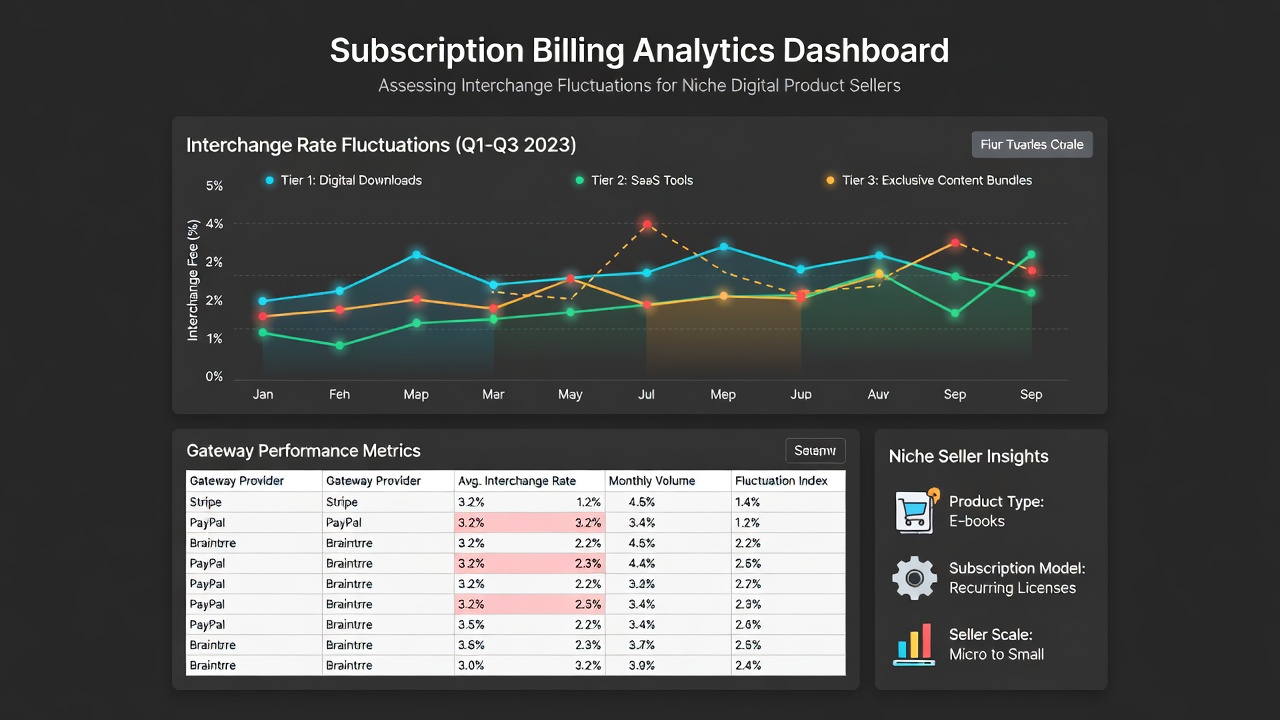
Assessing Interchange Fluctuations in Subscription Billing Gateways for Niche Digital Product Sellers
Subscription billing gateways process recurring transactions for niche digital products such as specialized software licenses, premium content libraries, and downloadable creative assets, where interchange fees represent a variable cost component that payment processors pass along from card networks. These fees fluctuate based on factors including merchant category codes, transaction volume tiers, and regional regulatory adjustments that card issuers apply periodically.
Core Mechanics of Interchange in Recurring Payment Systems
Interchange fees form the foundation of card transaction economics, with networks like Visa and Mastercard setting baseline rates that banks exchange during authorization and settlement, while subscription gateways apply these rates to recurring billing cycles that often span months or years. Digital product sellers encounter distinct patterns because their transactions typically carry merchant category codes associated with software services or information products, which can trigger different assessment structures compared to physical goods merchants. Observers note that even minor shifts in these rates accumulate across high-frequency billing events, affecting overall margin calculations for sellers who operate in narrow market segments with limited pricing flexibility.
Data from payment network reports shows that interchange percentages range from 1.5 to 3.5 percent depending on card type and processing method, with subscription models introducing additional variables such as stored credential indicators that issuers use to adjust fees during subsequent billing periods. Gateways designed for niche digital sellers often integrate tools that categorize transactions by product type and billing frequency, allowing operators to track how these elements influence fee assessments over time.
Key Drivers Behind Rate Variations
Several elements contribute to interchange fluctuations, starting with updates to network fee schedules that networks publish annually and implement on specific dates, while regulatory changes in different jurisdictions add further layers of variability for sellers who accept cards from multiple regions. Volume-based qualification tiers play a significant role because gateways evaluate cumulative transaction counts and average ticket sizes when determining whether individual subscriptions qualify for reduced rates, and digital product sellers frequently experience uneven volume patterns tied to product release cycles or seasonal demand shifts.
Card mix represents another variable, since premium rewards cards and corporate cards carry higher interchange rates than standard consumer cards, and subscription gateways track this distribution through reporting dashboards that segment billing data by card issuer and product category. As of October 2026, recent figures released by the European Central Bank highlight how cross-border digital transactions have seen incremental adjustments tied to updated consumer protection directives, creating ripple effects for gateways serving international niche markets.
Evaluation Methods Used by Digital Sellers
Operators assess interchange fluctuations through a combination of gateway analytics platforms and external benchmarking resources that aggregate anonymized transaction data across similar merchant profiles. These tools generate reports that break down fee percentages by billing cycle, card type, and geographic origin, enabling sellers to identify patterns such as elevated rates during renewal periods when stored credential surcharges apply. Researchers at institutions studying payment systems have documented cases where digital product merchants reduced effective interchange exposure by 0.4 to 0.8 percent through strategic gateway configuration changes, including optimized descriptor fields and updated MCC assignments verified with processors.
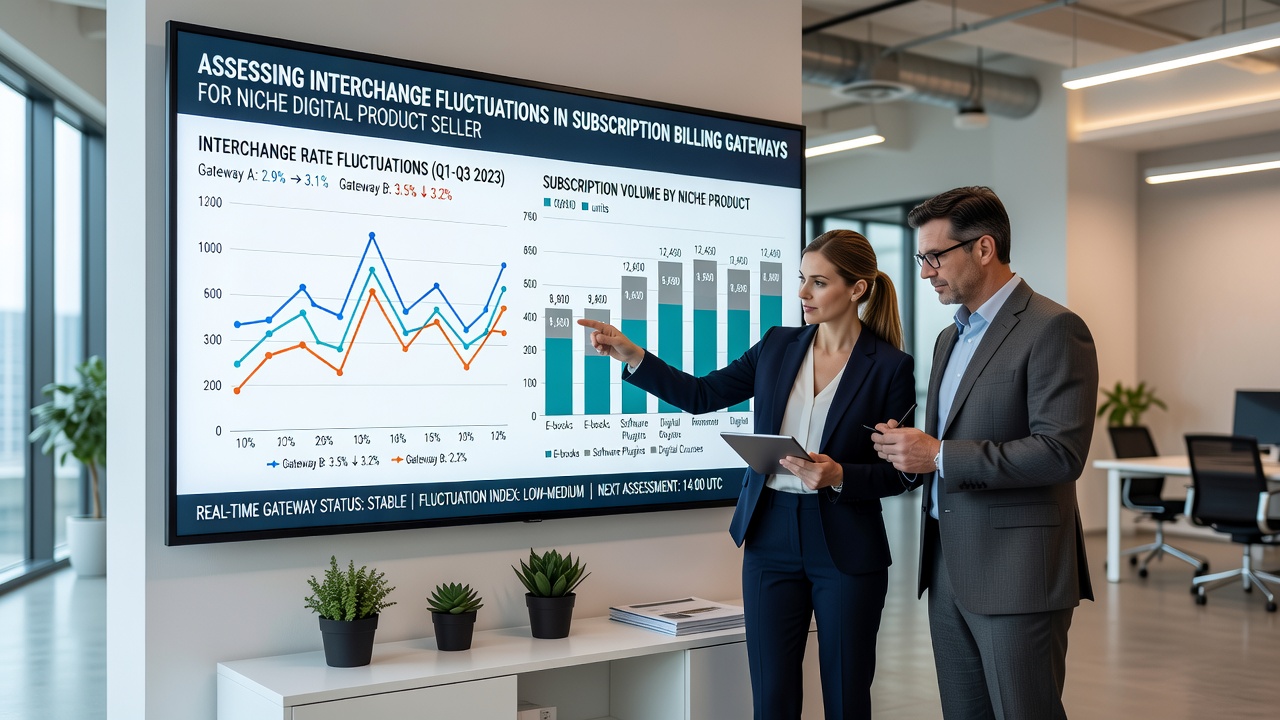
Regular reconciliation processes involve exporting billing records into spreadsheets or specialized financial software, where teams calculate net revenue after fees and compare results against historical baselines to detect deviations. Gateways commonly provide API endpoints that pull real-time interchange data, allowing automated alerts when rates exceed predefined thresholds for specific subscription tiers. Those who manage high-volume digital catalogs often cross-reference internal metrics with industry reports from organizations like the Payments Canada network to contextualize their observations within broader market trends.
Gateway Features Supporting Ongoing Monitoring
Modern subscription billing platforms incorporate modules dedicated to fee analysis, including filters that isolate interchange components from other costs such as gateway service fees and assessment charges. These features allow users to model scenarios where rate changes occur, projecting impacts on cash flow for product lines with different pricing structures. Integration with accounting systems further streamlines the process by tagging transactions with fee metadata that supports granular reporting and forecasting exercises.
Digital sellers in specialized categories benefit from gateways that support custom rules engines, which apply different handling logic based on product attributes or customer segments, thereby influencing how interchange qualification occurs. Continuous assessment relies on these technical capabilities combined with periodic reviews of network bulletins that announce upcoming modifications to fee structures.
Conclusion
Effective assessment of interchange fluctuations requires systematic use of gateway reporting tools, cross-referencing with regulatory and network data sources, and ongoing attention to transaction characteristics unique to recurring digital product billing. Sellers who implement structured monitoring processes gain clearer visibility into cost drivers that directly affect operational margins across their product portfolios.