How Boutique Retailers Leverage Analytics Dashboards to Refine Approval Workflows Across Hybrid Sales Channels Amid Economic Shifts
Written by Ulrich Coleman · Nov 15, 2026

How Boutique Retailers Leverage Analytics Dashboards to Refine Approval Workflows Across Hybrid Sales Channels Amid Economic Shifts
Retailers operating small specialty stores have integrated analytics dashboards into their operations to adjust approval workflows that span physical locations, e-commerce sites, and mobile apps, particularly as economic conditions evolved through late 2026. These systems pull transaction data from multiple points, allowing teams to monitor approval rates for payments, inventory releases, and order fulfillments without relying on separate tools for each channel. Data from the period shows that boutiques handling blended sales saw approval processing times drop when dashboards consolidated inputs from point-of-sale terminals and online gateways into single views.
Core Components of Dashboard-Driven Workflow Adjustments
Analytics platforms track key variables such as authorization success rates, decline patterns tied to payment methods, and channel-specific conversion metrics during periods of fluctuating consumer spending. Observers note that boutiques often configure alerts for sudden shifts in approval volumes, which become critical when broader economic indicators like rising interest rates influence purchasing behavior. Research from the National Retail Federation indicates that hybrid operators who updated their dashboard parameters monthly maintained steadier workflow efficiency compared to those using static reports.
Teams configure rules within these dashboards to route approvals differently based on real-time signals. For instance, an in-store transaction might trigger an immediate inventory check that feeds into an online order queue, while app-based purchases receive automated holds if cross-channel data flags potential stock discrepancies. This setup reduces manual interventions and keeps approval sequences aligned across channels even when daily volumes spike or drop.
Adapting to Economic Shifts in November 2026
Economic data released in November 2026 highlighted slower growth in discretionary retail categories, prompting many boutiques to recalibrate their approval thresholds. Dashboards incorporated external feeds from sources like consumer confidence indices and regional sales benchmarks, enabling teams to tighten or loosen criteria for high-value approvals. Studies from Eurostat retail reports documented that specialty stores using such integrated monitoring experienced fewer workflow bottlenecks during those months than peers relying on siloed channel systems.
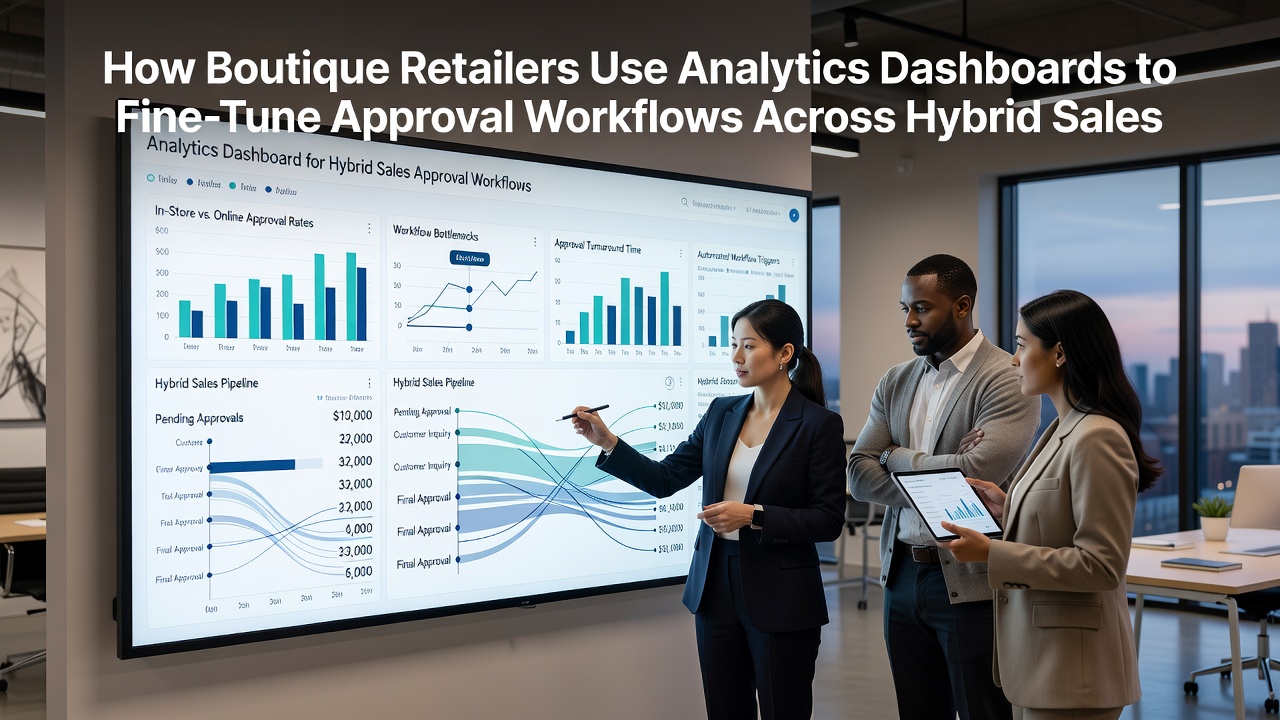
One documented case involved a multi-location apparel retailer that linked its dashboard to both payment processor logs and supply chain updates. When economic indicators pointed to reduced foot traffic in physical stores, the system automatically adjusted approval sequences to prioritize online and app orders while flagging potential declines earlier in the process. This approach kept overall approval rates stable despite the shift in channel mix.
Hybrid Channel Data Integration Techniques
Effective dashboards aggregate data from legacy terminals, cloud-based e-commerce platforms, and mobile checkout apps into unified datasets. Retail technology providers have reported that boutiques achieve this through standardized APIs that normalize transaction fields across sources, allowing queries for approval trends segmented by channel and time period. Those who've implemented these connections find that cross-referencing in-store swipe data with online cart abandonment rates reveals workflow friction points that single-channel tools overlook.
During economic variability, operators often add layers for predictive elements, such as forecasting approval volumes based on recent patterns and macroeconomic signals. Canadian retail analyses from Statistics Canada showed that boutiques incorporating these elements into dashboards reduced workflow overrides by noticeable margins in the latter half of 2026. The process relies on clean data pipelines rather than complex modeling, keeping adjustments practical for smaller teams.
Practical Examples from Boutique Operations
Take one jewelry retailer with stores in two cities plus an active website and app. Their dashboard pulled approval data daily, highlighting when mobile payments faced higher decline rates during certain economic windows. Staff then fine-tuned rules to route those transactions through alternative verification steps, maintaining flow without separate processes for each sales avenue. Similar patterns appear in reports covering home goods and specialty food operators who blended channels.
Another instance features a bookstore chain that used dashboard visualizations to compare approval speeds between in-store events and online pre-orders. When economic data signaled tightening consumer budgets, the system flagged slower approvals on higher-priced items across channels, prompting workflow tweaks like batch processing for repeat customers. These adjustments stayed grounded in observed metrics rather than assumptions.
Conclusion
Boutique retailers continue to refine approval workflows by embedding analytics dashboards that unify hybrid channel data, responding to economic conditions documented through 2026. The approach centers on consolidated metrics, rule-based routing, and periodic recalibrations drawn from transaction records and external indicators. Evidence from industry and government sources confirms that such systems support consistent operations when sales patterns shift between physical and digital avenues.